

Long-term use of aluminum substrates generates a large amount of heat. What needs to be done then is to dissipate this heat as quickly as possible, otherwise it will cause great damage to the product itself. Professionals are well aware of this, so what are the heat dissipation methods?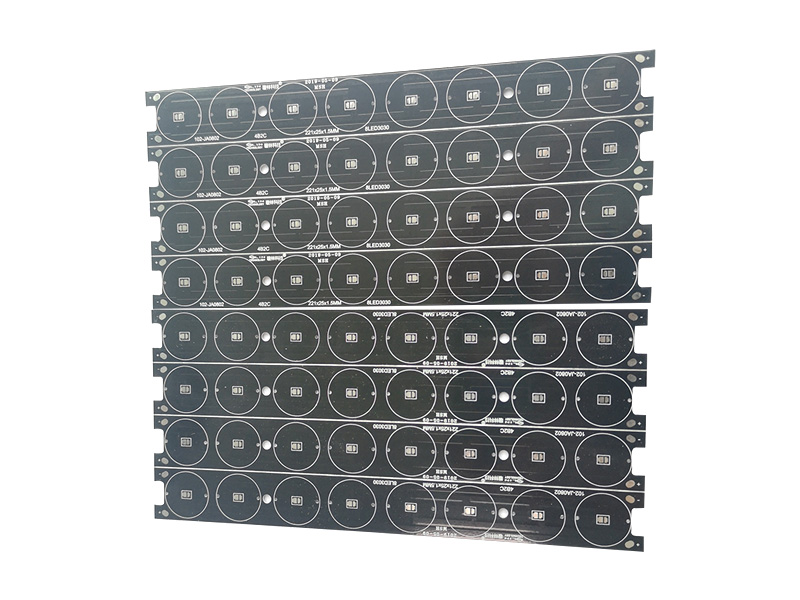
The first way to dissipate heat is through the aluminum substrate itself. The materials widely used at present include copper-clad materials, epoxy glass cloth materials, or resin glass cloth materials, with a few products using paper-based copper-clad materials. Although these materials have very good electrical and processing properties, their heat dissipation characteristics are very poor. As a component with high heat dissipation, there are many ways to dissipate heat, so it is difficult to rely on its own resin to transfer heat, which mainly passes from the component surface to the surrounding environment.
However, as electronic components become smaller and smaller, mounting precision requirements keep rising while more and more heat is generated. Relying only on the tiny surface of the component for heat dissipation is certainly not enough. At the same time, with the widespread use of many surface mount components, the large amount of heat generated by the components will be transferred directly to the circuit board. Therefore, the best way to solve the heat dissipation problem is to improve the ability of direct contact between the heating component and the board itself, so this contact can be transmitted or radiated directly through the circuit board.
For equipment using natural convection air cooling, it is best to arrange integrated circuits vertically or horizontally. Another way is to arrange the circuit rationally, which can also achieve a heat dissipation effect. Increasing the residual copper foil area and the number of thermal vias are the main means of heat dissipation.












