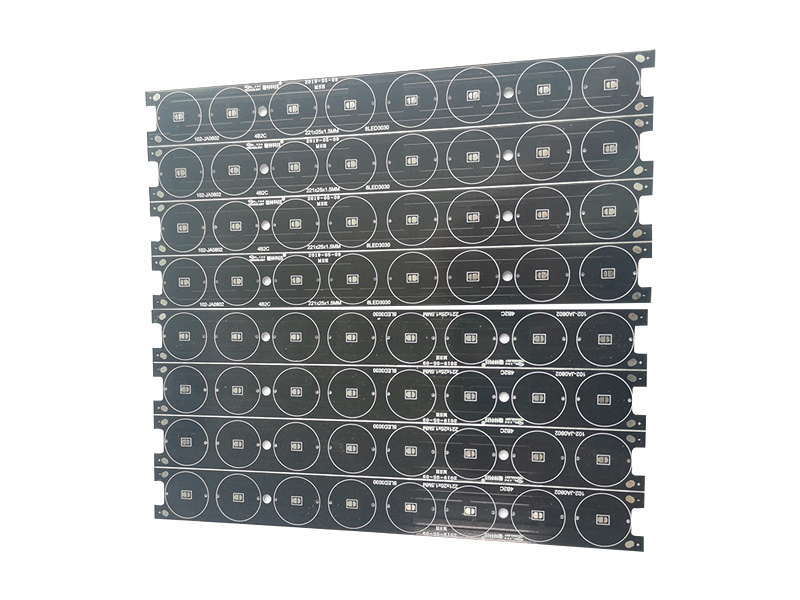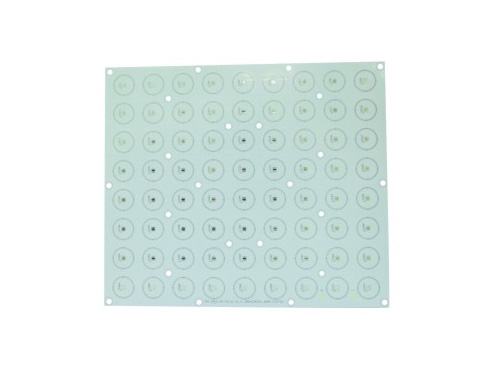
Since the advent of LEDs, heat dissipation has always been a major challenge for manufacturers. When the LED junction temperature exceeds 85°C, it can lead to chip failure, phosphor oxidation, and light decay, and heat dissipation performance directly affects the service life of LED lamps. Aluminum substrates feature high thermal conductivity, low thermal resistance, voltage resistance, light weight, and oxidation resistance. The emergence of LED aluminum substrates has brought a new approach to solving product heat dissipation problems.
A double-sided aluminum substrate consists of a circuit layer (copper foil), a thermally conductive insulating layer, and a metal base layer. Its working principle is that power devices are surface-mounted on the circuit layer; the heat generated during operation is rapidly conducted through the insulating layer to the metal base layer, and then transferred away from the metal base layer, thereby achieving heat dissipation for the devices. Aluminum substrates are widely used in the LED industry, including LED street lights, spotlights, wall lights, buried lights, LED fluorescent lamps, and so on.
The quality of aluminum substrates directly affects the quality of finished LED lamps. Due to low entry barriers, a lack of core technology, and incomplete industry standards, the domestic aluminum substrate market currently suffers from uneven product quality. There is no specific measurement standard for the thermal conductivity of aluminum substrates, and the thermal conductivity of aluminum-based copper-clad laminates produced by different manufacturers varies greatly. Some aluminum substrate manufacturers cannot guarantee product quality, and their measured thermal conductivity data do not match the nominal data. At present, there is a certain gap between domestic aluminum substrate technology and international technology; lacking core technical support, products are low-end and homogenized, low-priced inferior products occupy the market, and high-end products are scarce. Companies are locked in vicious competition through price wars, and downward pressure on prices has left the entire industry with meager profits.
Aluminum substrates are the mainstream product among heat dissipation substrates. Government and industry authorities need to pay greater attention to the aluminum substrate industry and strengthen the development of industry standards, testing, and certification systems. Companies should focus on the long-term lighting market, build brand awareness, and keep pace with advanced industry levels in product technology. Low quality and low prices can only bring small short-term gains. Raising technical capability and product grade is the best way for companies to survive and thrive.