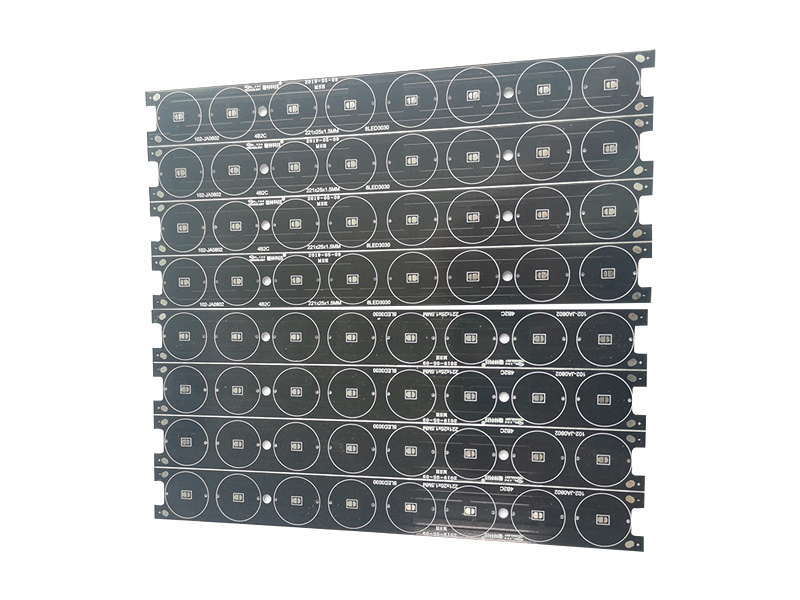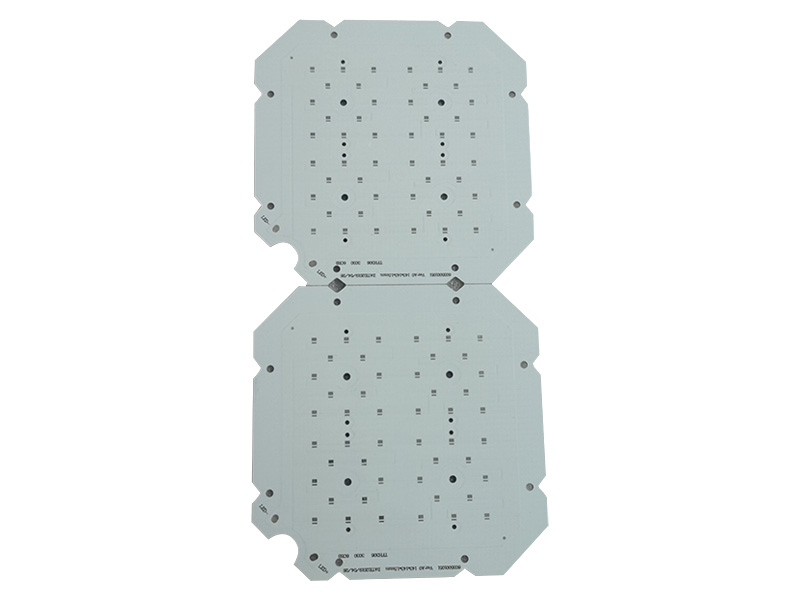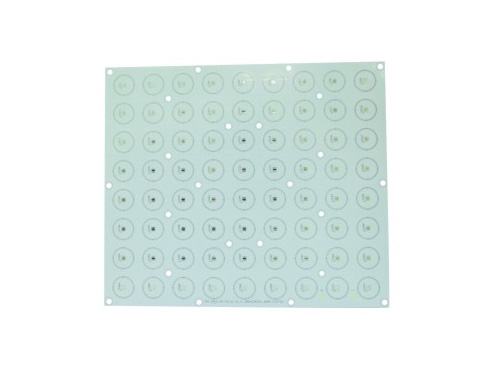
LED aluminum substrate Instructions for Use:
1. LED aluminum substrate: during mechanical processing such as drilling, punching, and cutting, take care not to break or contaminate the insulating thermally conductive layer immediately adjacent to the conductor.
2. With the rapid development of the electronics industry, the requirements for the flatness of finished PCBs are becoming increasingly strict. The bending, warping, and flatness of aluminum-based PCBs are affected by the structure and quality of the mechanical processing tools used for punching, cutting, and similar operations, as well as by effects arising from the different shrinkage coefficients among the circuit layer, the insulating thermally conductive layer, and the metal base layer. This effect is determined by the ratio of the thickness of the conductive layer (copper foil) to that of the metal base layer (aluminum plate); the larger the ratio, the greater the degree of bending. If the copper foil thickness is less than 10% of the metal base thickness, the metal base (aluminum plate) will dominate the mechanical properties and the flatness of the PCB will be satisfactory. If the copper foil thickness exceeds 10% of the metal base thickness, the PCB structure will warp.
3. Because of the difference in shrinkage coefficient between the circuit layer (copper foil) and the metal base layer, a PCB aluminum substrate always has some degree of bending. The degree of bending also depends on the amount of copper retained on the PCB and the width of the traces; if the traces are narrow enough, the stress caused by the shrinkage coefficient difference will be absorbed within the insulating thermally conductive layer.
4. The greater the module power density, the better the required thermal conductivity of the aluminum substrate and the lower the thermal resistance;
5. The greater the current-carrying capacity, the more the thickness of the aluminum substrate's conductive layer (copper foil) should be increased accordingly;
6. A minimum insulation barrier must be maintained between the edge of the board (or a hole in the board) and the nearest conductor, generally material thickness + 0.5 mm;
7. The insulation breakdown voltage of the aluminum substrate should meet the electrical insulation performance requirements of the module;