

What are the uses of PCB aluminum substrates?
An aluminum substrate is a metal-based copper-clad laminate with good heat dissipation performance and is the base material for high-power power electronics circuit structure technology and interconnection technology. In PCB prototyping, a common single-sided aluminum substrate consists of a three-layer structure: the circuit layer (copper foil), the insulating layer, and the metal base layer; a double-sided board has the structure of circuit layer, thermally conductive insulating layer, aluminum base, thermally conductive insulating layer, and circuit layer. There is also a double-sided aluminum substrate made by mixing a fiberglass board with an aluminum base: the aluminum base material is on the bottom layer, the core board is aluminum, and the top and bottom layers carry the traces.
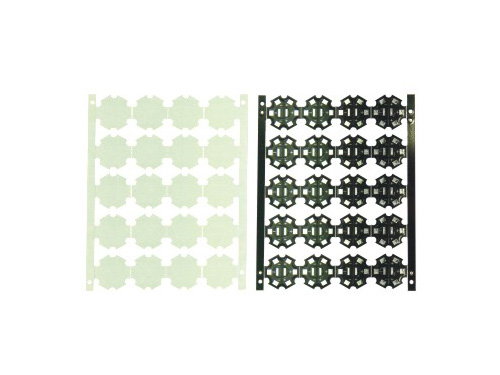
In PCB prototyping, what are the uses of aluminum substrates?
1. Audio equipment: input (output) amplifiers, balanced amplifiers, audio amplifiers, preamplifiers, power amplifiers, etc.
2. Power equipment: switching regulators, DC/AC converters, SW regulators, etc.
3. Communication electronic equipment: high-frequency amplifiers, filter circuits, transmitter circuits.
4. Office automation equipment: motor drives, etc.
5. Automobiles: electronic regulators, igniters, power controllers, etc.
6. Computers: CPU boards, floppy disk drives, power supplies, etc.
7. Power modules: inverters, solid-state relays, rectifier bridges, etc.
8. Lamps and lighting: in PCB prototyping, aluminum substrates used for LED lamps have also begun to be used on a large scale.












