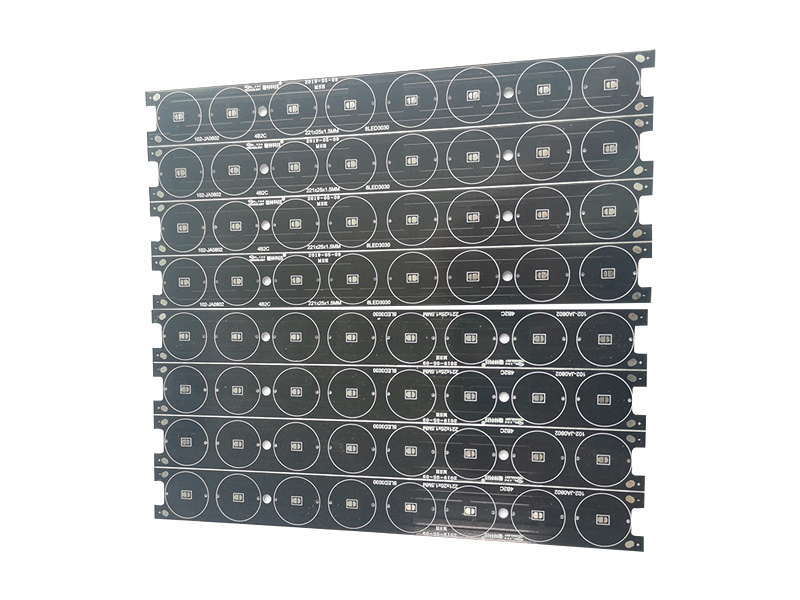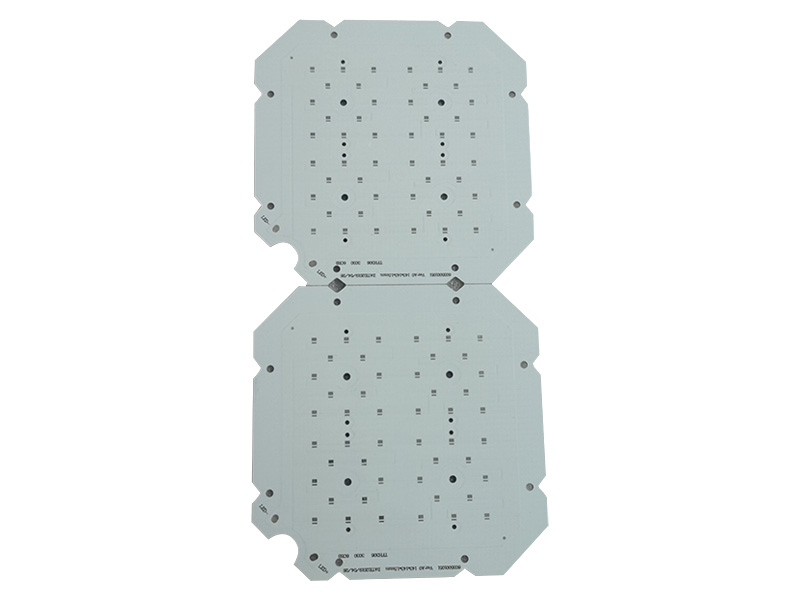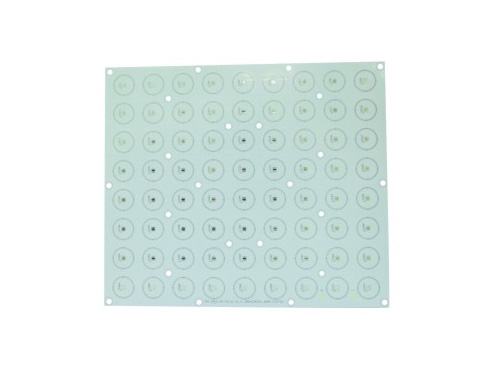
Recently many friends have been asking how aluminum substrate PCBs dissipate heat and what techniques are used. Today let us take a look together at the heat dissipation techniques for aluminum substrate PCBs.
1. Heat dissipation through the aluminum substrate PCB itself: the PCBs widely used today are copper-clad/epoxy glass cloth substrates or phenolic resin glass cloth substrates, with a small number using paper-based copper-clad laminates. Although these base materials have excellent electrical and processing properties, their heat dissipation performance is poor. As a way to dissipate heat from high-heat components, one can hardly rely on the resin of the PCB itself to conduct heat; instead, heat is dissipated from the component surface into the surrounding air. However, as electronic products enter an era of component miniaturization, high-density mounting, and high-heat assembly, relying solely on components with a very small surface area for heat dissipation is not enough. At the same time, due to the extensive use of surface-mount components such as QFP and BGA, the heat they generate is transferred in large amounts to the PCB. Therefore, the best way to solve the heat dissipation problem is to improve the heat dissipation capability of the PCB that is in direct contact with the heat source. Both aluminum substrates and copper substrates are materials with good heat dissipation performance and are among the most favored board materials in the LED industry. An aluminum substrate PCB can conduct or dissipate the heat away.
2. For equipment cooled by free-convection airflow, it is best to arrange integrated circuits (or other components) in a horizontal-length or vertical-length orientation.
3. Use a reasonable trace design to achieve heat dissipation: since the resin of the board has poor thermal conductivity, copper foil traces and holes are good conductors of heat, so increasing the remaining copper ratio and adding thermal vias are the main heat dissipation methods.
4. High-heat components + heat sinks and thermal plates: when a few components (fewer than three) generate a large amount of heat on the PCB, a heat sink or heat pipe can be added to the heat-generating components; if the temperature still cannot be reduced, a heat sink with a fan can be used to improve heat dissipation. When the number of heat-generating devices is larger (more than three), a large heat dissipation cover (plate) can be used, which is a dedicated heat sink customized according to the positions and heights of the heat-generating components on the PCB, or a large flat heat sink with different component heights located on it. The heat dissipation cover is placed over the component surfaces as a whole, contacting each component to dissipate heat. However, because the height consistency of components during assembly and soldering is poor, the heat dissipation effect is not good. Usually a soft thermal phase-change pad is added to the component surface to improve heat dissipation.