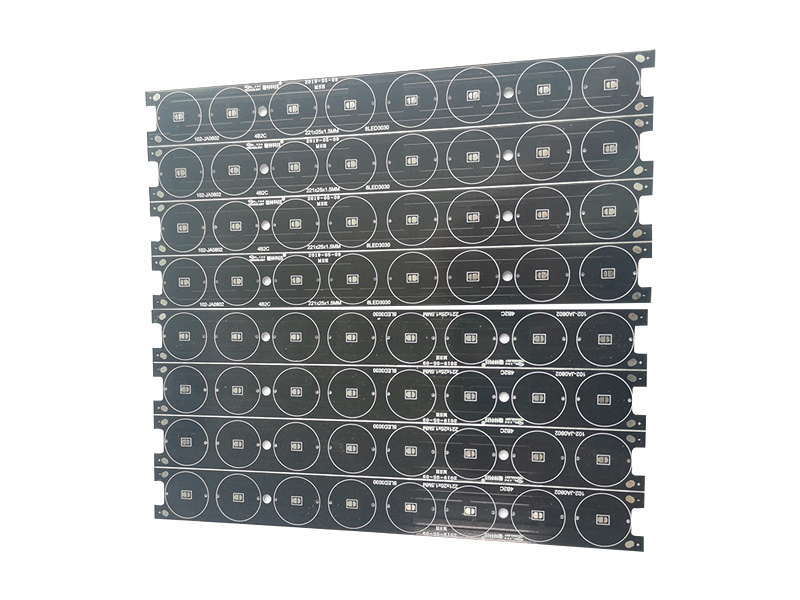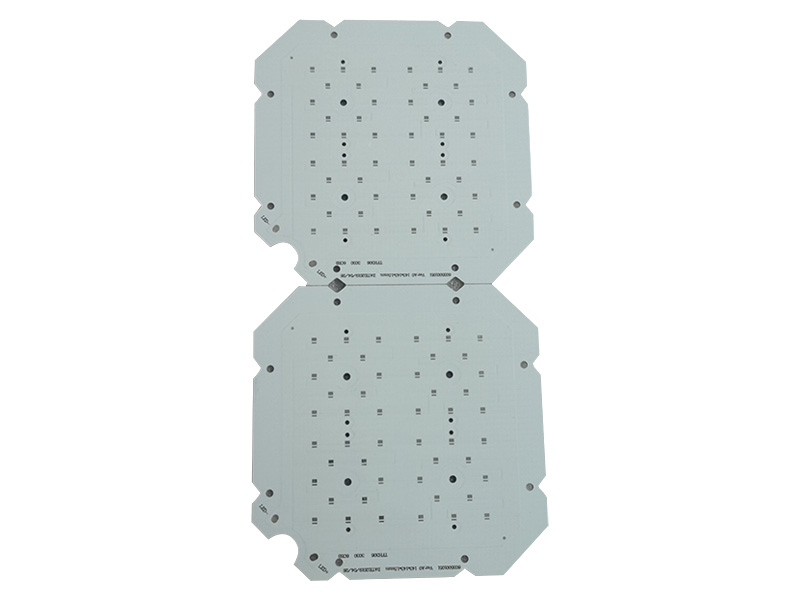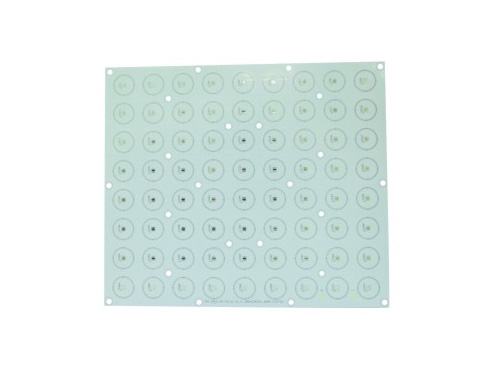
Besides exposure, LED aluminum substrate can also use a screen printing process. Exposure costs more than screen printing. Is the only benefit that the circuit looks better? Circuits made by screen printing still work, and the LED chips still light up. The exposure process is more expensive, yet it brings fewer benefits. Does exposure affect neither the brightness nor the lifespan of the LED chips, and add nothing to heat dissipation or withstand voltage? So what exactly is the difference between the exposure and screen printing processes of LED aluminum substrate?
1. The exposure process transfers the image from the original film onto the photosensitive substrate using a light source.
The ink used for exposure is photosensitive ink, produced in a cleanroom. To ensure that there is no dust or particles at all on the board surface, the ink thickness must reach 15 UM to 20 UM, which keeps the ink from yellowing after 280 degrees and brings the reflectivity above 90%. This raises the production cost and lowers the efficiency of the photosensitive process, which is why PCB prices are higher. Some high-precision screen printing requirements, such as a 4 mm board width and 0.2 mm line width, cannot meet this demand.
2. The screen printing process prints descriptive text such as component outlines and serial numbers onto the component surface or the solder surface, to facilitate later component insertion (including surface-mount component placement) during board production and product maintenance.
Screen printing uses light-curing / thermosetting ink and can be done freely in an ordinary room. However, it cannot guarantee requirements such as board smoothness and ink thickness. If it stays white for a long time, yellowing tends to occur and the required reflectivity cannot be reached.
For example, some precision requirements cannot be met, such as the pad of a 3014 LED chip. If it is made by screen printing, the pad tends to shrink significantly, and the pad edges become jagged and uneven, which easily makes solder paste printing and LED chip placement difficult.