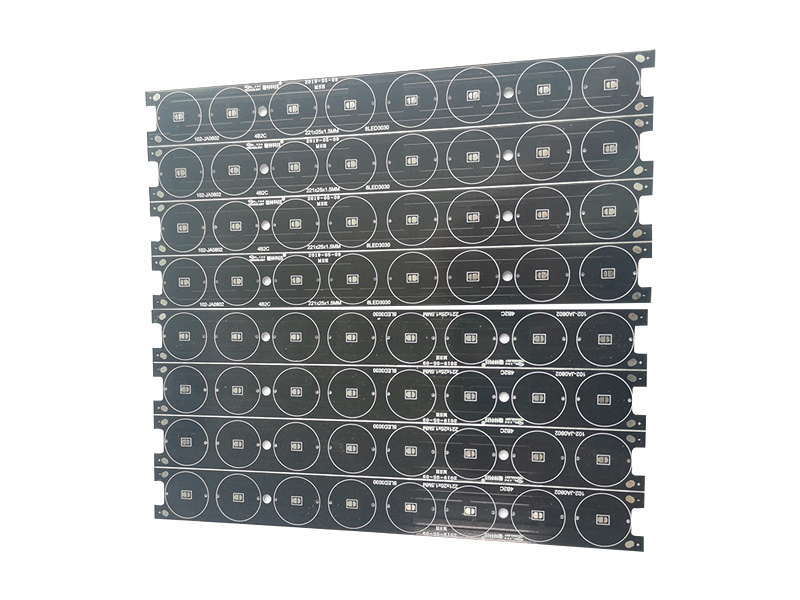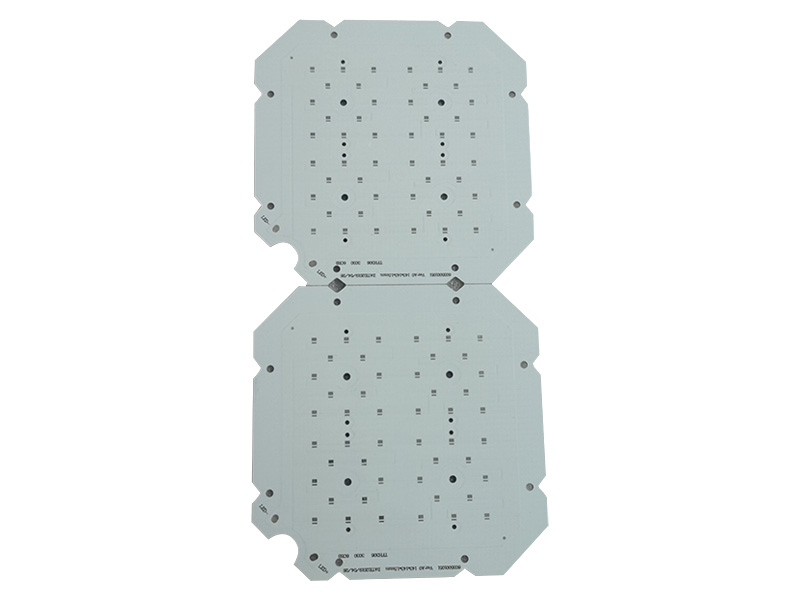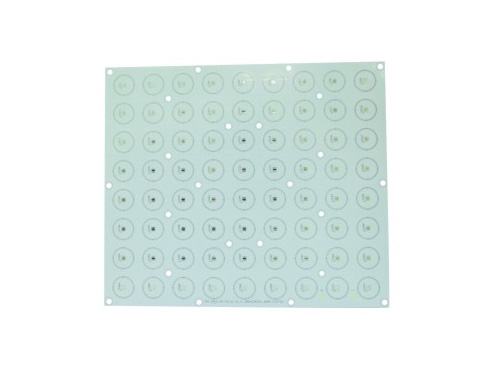
Aluminum substrate is a metal-based copper-clad laminate with good heat dissipation, mostly used to make LED lamps. Below we take a look at the difficulty analysis and manufacturing specifications of the aluminum substrate production process.

1. Power devices often use aluminum substrates, and because of the high power density the copper foil is relatively thick. If copper foil above 3 oz is used, line-width compensation in the engineering design is required for etching.
2. During PCB processing, the aluminum base surface of the aluminum substrate is protected in advance with a protective film; otherwise some chemicals will attack the aluminum surface and damage its appearance.
3. The milling cutters used in glass fiber board production have relatively low hardness and run at high speed, whereas the milling cutters used for aluminum substrates are harder and their speed must be at least two-thirds slower.
4. For glass fiber board production, the machine's own cooling system is sufficient for heat dissipation, but when machining aluminum substrates, alcohol must be added to the router head for cooling.
5. Aluminum substrate manufacturers face certain difficulties in producing aluminum substrates, as follows:
(1) Aluminum substrates are produced by machining; no burrs are allowed on hole edges after drilling, otherwise the withstand voltage test will be affected. Milling aluminum substrates is very difficult, and punching them requires advanced molds. After punching and forming, the edges should be neat, free of burrs, and without damage to the solder mask layer at the board edge. A working mold is generally used: holes are punched out along the lines and the shape is punched from the aluminum surface. After punching and forming, board warpage should be less than 0.5%.
(2) Throughout the entire aluminum substrate production process, the aluminum substrate must not be rubbed; touching it by hand or with certain chemicals will cause the surface to discolor or turn black, which is absolutely unacceptable. Therefore, avoiding any contact with the aluminum base throughout the whole process is one of the difficulties in producing aluminum substrates.
(3) When aluminum substrates pass the high-voltage test, telecom power-supply aluminum substrates require a 100% high-voltage test. Dirt on the board surface, holes and burrs along the aluminum substrate edges, jagged traces on the circuit, or any insulating defect can cause fire, leakage, and insulation breakdown during the high-voltage test, leading to delamination and blistering of the withstand voltage test boards, which are then all rejected.