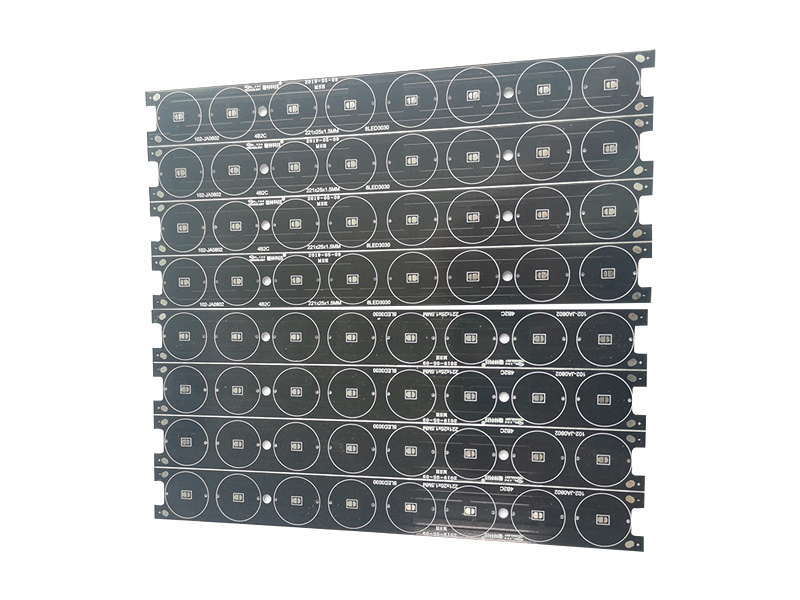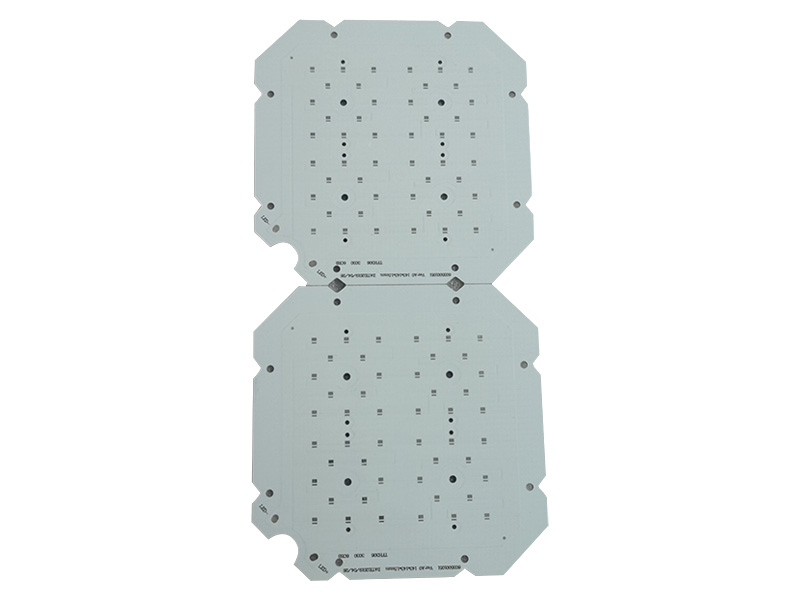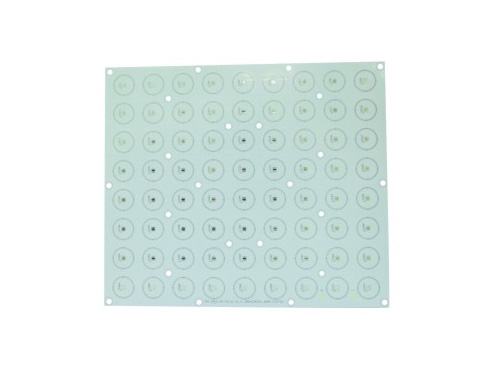
I. Appearance: whether the front of the product has any scraped-copper marks, whether the ink is fully applied, and whether it is formulated according to the ink ratio.
II. Circuit: what is the copper-platinum thickness of this product? The circuit of this product is not made by other metal pressing (or other metal paste printing), and the circuit determines the current that the product cannot withstand.
III. Insulating layer: which resin or other insulating layer should be used for the product's insulating layer, and which insulating layer determines the product's thermal conductivity. What is the insulation thickness of the product? Insulating layers of different thicknesses withstand different voltages.
Aluminum: what is the thickness of the product's aluminum, is it pure aluminum, and has it been anodized? Different aluminum purities give different heat transfer coefficients, and whether it is corroded by etching water during production—the circuit board is more than just a circuit, and it also determines how long the product can be used and whether it is safe, just like human blood vessels.
An LED aluminum substrate consists of a circuit layer, a thermal insulating layer and a metal base plate. The circuit layer (i.e., copper foil) is usually etched to form a printed circuit so that the components are connected to each other. Generally, the circuit layer requires a large current-carrying capacity, so thicker copper foil should be used.
The thermal insulating layer is the core technology of the PCB aluminum substrate. It is usually made of a special polymer filled with special ceramics, featuring low thermal resistance, excellent viscoelasticity, resistance to thermal aging, and the ability to withstand mechanical and thermal stress. The high-performance LED aluminum substrate insulating layers such as T-101, T-111, T-112, T-113, T-114 and T-200, T-300, T-400, T-500 and T-600 are exactly applications of this technology, giving them excellent thermal conductivity and high-strength electrical insulation. The metal base layer is the supporting component of the LED aluminum substrate and requires very high thermal conductivity; usually an LED aluminum substrate can also use a copper plate (which provides very good thermal conductivity), suitable for conventional machining such as drilling, punching and cutting.