
Product Details
Both domestic and foreign metal PCB aluminum substrate manufacturers have developed their own methods to detect and evaluate the heat dissipation performance of their products. In 1995, the American Society for Testing and Materials (ASTM) developed the "Standard Test Method for Thermal Conductivity of Thin Thermal Solid Insulation" with the standard number ASTMD5470-1995. Subsequently, many foreign manufacturers of metal PCB substrates have adopted this method to test the thermal conductivity of metal PCB aluminum substrates, and used thermal conductivity to measure the thermal conductivity of metal PCB aluminum substrates.
However, there is currently no testing instrument in China that meets the ASTMD5470 standard. In 2000, the electronic industry military standard sj20780-2000 specified the thermal resistance testing method for metal PCB aluminum substrates. This method was developed based on the testing principle of a foreign company's "thermal resistance testing method". At present, 704 factories in China have been equipped with testing equipment in accordance with the requirements of SJ20780.
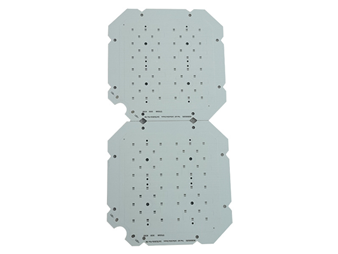
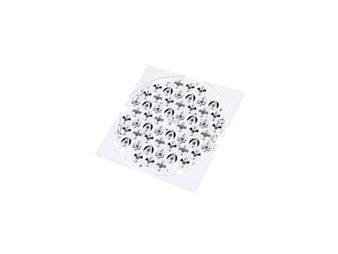
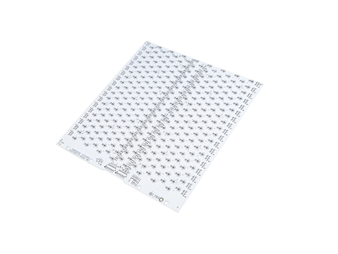
The metal PCB aluminum substrate consists of a metal substrate (such as aluminum plate, copper plate, iron plate, silicon steel plate), a high insulation layer, and copper foil. The insulating medium layer is generally made of high thermal conductivity epoxy glass fiber cloth adhesive tape or high thermal conductivity epoxy resin. The thickness of the insulating dielectric layer is 80-100 microns, and the thickness of the metal plate is 0.5mm, 1.0mm, 1.5mm, 2.0ma, and 3.0mm. Characteristics and application fields of various metal substrates:
Iron based copper-clad laminates and silicon steel copper-clad laminates have excellent electrical properties, magnetic permeability, high voltage resistance, and substrate strength. Mainly used for brushless DC motors, recorders, spindle motors, and integrated machine intelligent drives. However, the magnetic properties of silicon steel copper composite plates are superior to those of iron-based copper composite plates. Copper based copper-clad laminates have the basic properties of aluminum based copper-clad laminates, and their heat dissipation performance is superior to that of aluminum based copper-clad laminates. This substrate can carry high currents and is used to manufacture high-power circuit boards such as power electronics and automotive electronics. However, copper substrates have high density, value, and are prone to oxidation, which limits their application and their usage is much lower than that of aluminum based copper-clad laminates.
The above is the relevant explanation about PCB aluminum substrate sampling technology. If you want to learn more information, please feel free to consult.
Online Inquiry
Recommended Products