Product Details
In today's rapidly developing semiconductor lighting industry,Aluminum substrate for plant lightingThe key issue of heat dissipation will become a big problem, so how can we achieve the highest heat dissipation efficiency? Today we will talk about the key points of plant lighting aluminum substrate heat dissipation chips. There are various production methods for aluminum substrates for plant lighting, and the thermal conductivity of chips directly affects heat dissipation. Of course, as a chip, not only can heat dissipation be considered, but also the dielectric constant and thermal expansion coefficient. Nowadays, with the widespread use of aluminum substrates for plant lighting in the market, ceramic substrates have been treated relatively low-key.
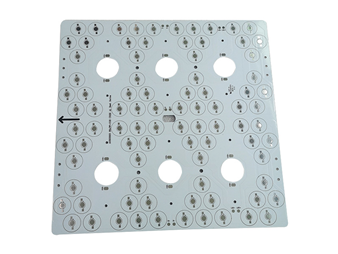
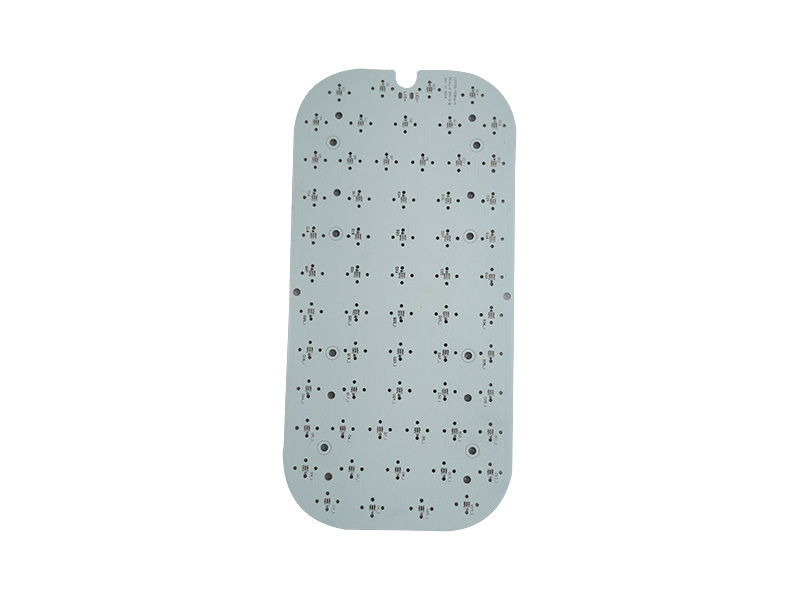
Aluminum substrate for plant lighting - commonly used in LED lighting products. There are two sides, the white side is the soldered LED pins, and the other side is the color of aluminum, which will come into contact with thermal conductivity after thermal solidification.
The commonly used metal aluminum plates for plant lighting aluminum substrates mainly include the 1000 series, 5000 series, and 6000 series. The basic characteristics of these three series of aluminum materials are as follows:
The 1000 series represents 1050, 1060, 1070, and 1000 series aluminum plates, also known as pure aluminum plates, which have the highest aluminum content among all 1000 series and can reach a purity of 99. More than 100%. Due to the absence of other technical components, the production process is relatively simple and the price is relatively cheap. It is the most commonly used series in conventional industry.
2. The 5000 series represents the 5052, 5005, 5083, and 5a05 series. The 5000 series aluminum plate belongs to the commonly used alloy aluminum plate series, mainly composed of magnesium, with a magnesium content between 3-5%, also known as aluminum magnesium alloy. Its main characteristics are low density, high tensile strength, and high elongation. In the same region, the weight of aluminum magnesium alloy is lower than other series, so it is often used in aviation fields such as aircraft fuel tanks.
6061 is a cold treated aluminum forging product suitable for applications with high corrosion resistance and oxidation resistance requirements. Good usability, excellent interface characteristics, easy coating, and good processability.
The thermal conductivity of the 5000 series aluminum substrate is about 135w/(m · k), the 6000 series is about 150w/(m · k), and the 1000 series is about 220w/(m · k).
Now let's take a look at the ceramic substrate. Ceramic circuit boards have the following characteristics:
Strong mechanical stress and stable shape; High strength, high thermal conductivity, and good insulation; Strong adhesion and corrosion resistance.
Excellent thermal cycling performance, with up to 50000 cycles and high reliability.
◆ Equipped with PCB (or IMS substrate) that can etch various graphic structures; No pollution, no pollution.
◆ Wide working temperature -55 ℃~850 ℃; The thermal expansion coefficient is close to that of silicon, simplifying the production process of power modules. Can save transition layer production task orders, manpower, materials, and reduce costs;
Reduce welding layers, lower thermal resistance, minimize voids, and improve yield;
When the carrying capacity is the same, it is 0. The width of 3mm thick copper foil wire is only 10% of that of ordinary printed circuit boards;
Excellent thermal conductivity makes the chip packaging very compact, greatly improving power density and enhancing the reliability of the system and devices;
Ultra thin (0.25mm) ceramic substrate can replace BEO and has no environmental toxicity;
◆ High insulation and voltage resistance, ensuring personal safety and equipment protection capabilities.
New packaging and assembly methods can be implemented to achieve high product integration and reduce volume.
Aluminum nitride ceramic plates have a high thermal conductivity, with a theoretical room temperature thermal conductivity of 319w/(mk), and good insulation properties, with a resistivity greater than 1014 Ω· cm at 25 ℃.
Ceramic substrate products are available for selection, and the development of the open cooling application industry, due to the cooling characteristics of ceramic substrates, combined with the advantages of high heat dissipation, low thermal resistance, long service life, and voltage resistance of ceramic substrates, has accelerated rationalization with the continuous improvement of production technology, equipment, and product prices, expanding the application fields of the LED industry, such as household appliances, car lights, street lamps, outdoor large billboards, etc. The successful development of ceramics. The substrate will provide services for indoor and outdoor lighting products, expanding the market scope of the LED industry in the future.
After comparison, I believe everyone is rightAluminum substrate for plant lightingI have a certain understanding of ceramic circuit boards. With the update and iteration of technology, a new and better product will replace the old technology. The market is always a survival of the fittest. As a manufacturer, it should be a healthy competition to make your product better and better, thereby driving the progress and takeoff of the entire industry.
Online Inquiry
Recommended Products