
Product Details
Firstly, fiberglass board: In order to gain a price advantage, some manufacturers use fiberglass board as the PCB board for LED lights. Fiberglass brazed plates can also be divided into fiberglass plates, double-sided copper foil peeling plates, perforated fiberglass plates, and single-sided copper foil fiberglass plates according to different materials and production processes.
Due to these factors, the price of high-power landscape lighting aluminum substrates will be directly affected. There is a way to sacrifice the cost of heat dissipation, and a more cost-effective approach is to directly implement it in the layout circuit of the glass brazing plate. LED tubes made from these circuit boards will be cheaper than aluminum tubes, but the cooling effect will not be as good as aluminum tubes. Or you can check what material is better for the LED light heat sink
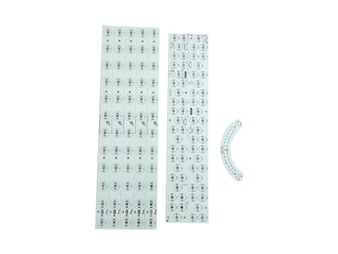
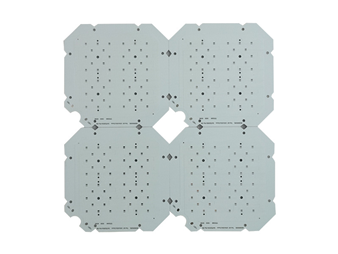
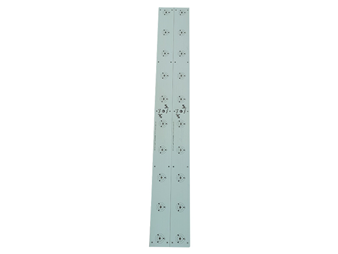
Aluminum substrate: The manufacturing structure is divided into three layers, with the top layer being the circuit board layer, the middle being the thermal insulation layer, and the bottom being the aluminum substrate. Currently, most LED T8 lights use this type of circuit board.
The circuit board layer generally uses copper foil as the conductive circuit. Copper has good conductivity, but its price is also very expensive. In order to save some costs, some manufacturers thin the copper foil, which also affects its conductivity. Due to differences in thermal conductivity and insulation materials, prices can also vary significantly. Special ceramic polymers can be used for excellent thermal conductivity and insulation, but this material is very expensive and difficult for many manufacturers to accept.
Therefore, they are all looking for cheaper materials to reduce costs, such as epoxy resin and glass cloth, which are commonly used materials. Aluminum base can be made of copper plate and aluminum plate. Copper plate has good heat dissipation effect, but the cost will also be high. So generally, aluminum plates are used to make aluminum substrates, and the requirements are that the aluminum plates must have good thermal conductivity and be not easy to fold.
In summary, the biggest enemy of high-power landscape lighting aluminum substrates is heat dissipation, so it is necessary to have substrates with high heat dissipation coefficients, fast thermal conductivity, fast heat dissipation, good aluminum substrates, and good heat dissipation; However, aluminum substrates are more expensive than fiberglass, and high-power landscape lighting aluminum substrates require sufficient heat dissipation to ensure luminous efficiency. Therefore, aluminum substrate is the preferred choice.
Online Inquiry
Recommended Products